Building a metric
Every link-building team has data. Not every team knows how to weigh it. This is the story of how I turned gut instinct into a scoring system the whole organisation could use.
Year
2024-2025
Client
Traffic Lab Aps
Link-building formula
The Problem
Link-building in competitive markets means evaluating dozens of potential opportunities every week. Each one comes with a stack of metrics - Domain Rating, organic traffic, ranking keywords, spam score, PowerTrust, Topical Trust Flow and more. The data was all there. The problem was that nobody had a consistent way to weigh it. In practice, decisions came down to gut feeling. One team member might prioritise DR. Another might focus on traffic. A third might have a hunch about topical relevance. There was no shared standard, which meant inconsistent acquisitions, wasted outreach time, and a backlink profile that grew without a clear strategy behind it.
The insight
The issue wasn't a lack of data - it was a lack of hierarchy. Not all metrics are created equal. A strong Topical Trust Flow in our exact niche is worth far more than a high DR, because DR is easily manipulated while topical relevance is not. But that knowledge lived in my head, not in a process anyone else could follow. For link-building to scale properly, the decision-making framework needed to be externalised - turned from instinct into infrastructure.
What we built
I developed a proprietary valuation formula that assigns a weighted score to each metric based on its actual importance to our specific market and goals. Every potential link opportunity runs through the formula and receives a score out of 100. The closer to 100, the stronger the opportunity. The weighting wasn't decided alone - I ran a workshop with the different teams involved in link acquisition so that the priorities reflected collective expertise. Outreach became significantly more focused. Links that scored highly got prioritised. Low-scoring opportunities got dropped without debate. The outcome was threefold: time saved, money saved, and a measurably healthier backlink profile. But perhaps more importantly, link-building stopped being a specialist black box and became something the whole team could participate in confidently. The best frameworks don't just solve a problem. They make the solution accessible to everyone.
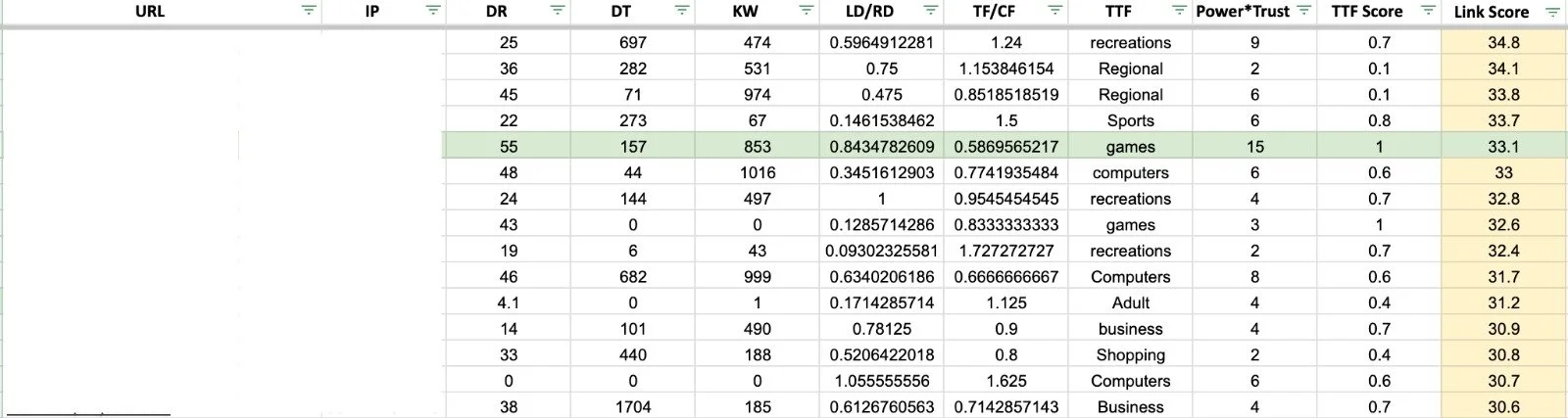

"The best frameworks don't just solve a problem; they eliminate the debate. I built a proprietary scoring system that removes guesswork, saving time and budget by focusing the team’s energy only on the opportunities that move the needle"
— Valeria Caro